Lessons on Going Global
What scaling Kiwi companies get right (and wrong) when expanding offshore
Most companies expand because the opportunity is there. Customers are asking for it, growth feels within reach, and it seems like the natural next step.
The complexity shows up once the business is operating across markets. Leaders manage people they rarely see, early hires shape markets from afar, and decisions that used to be quick take longer. What looks like a market decision often becomes an operating one. The companies that navigate this well are deliberate early, getting clear on how they will work across markets, who they need in place, and how teams stay connected as they grow.
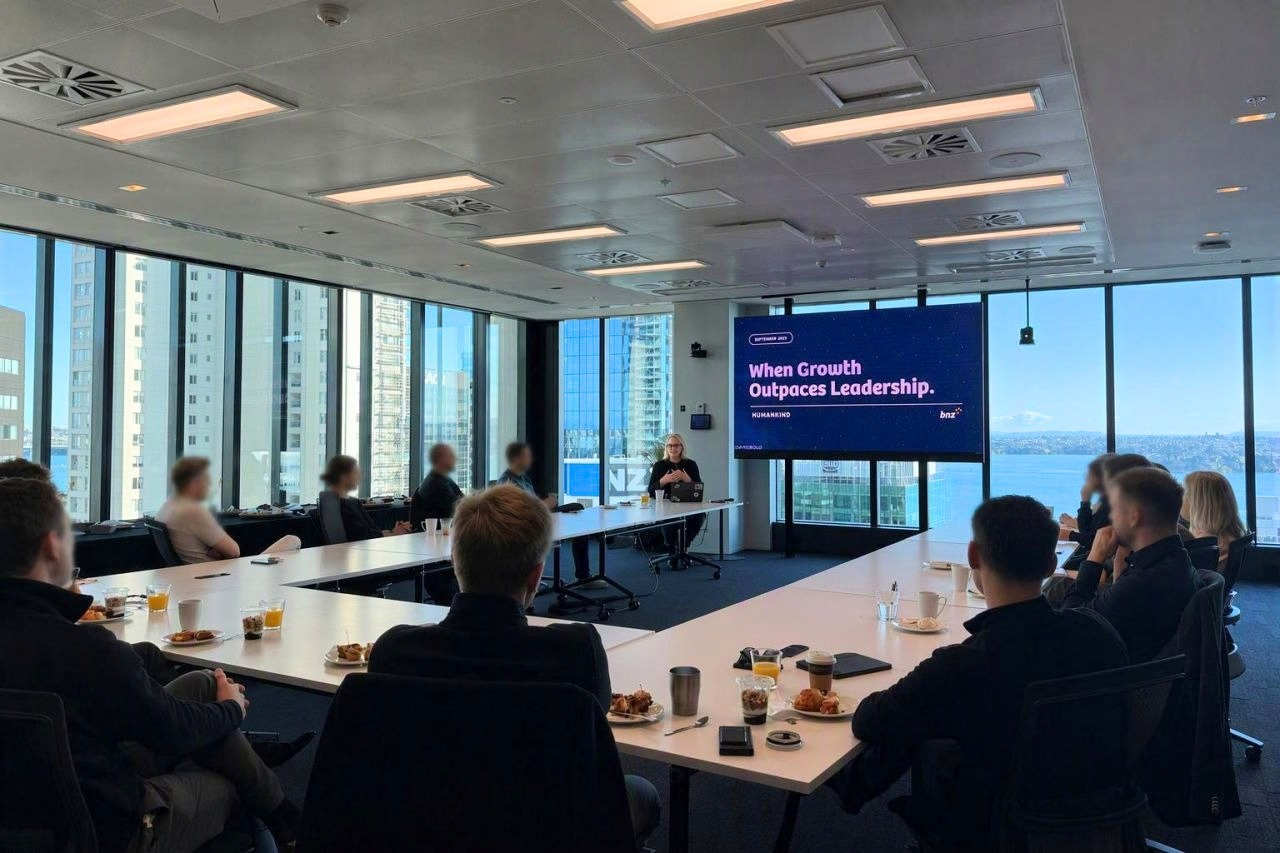
Humankind and Icehouse Ventures recently brought together founders and operators from New Zealand companies already working across Australia, the US and beyond alongside the launch of Foundations for Going Global: A Talent Playbook. A few themes came through consistently.
01 - Your first international hire carries real weight
Early hires have a disproportionate impact on how a market develops, particularly in the first year.
Teams often spend time in-market first, building relationships and getting closer to customers before committing to a hire. That tends to sharpen the brief, though the bigger shift is usually around the level of experience required.
People who have done this before are able to find their footing quickly, build credibility, and create early traction. Where companies run into difficulty is when the role requires more direction than can realistically be given from another country. Leaders at home get pulled into the detail, and progress slows in both places.
What helps is being clear on the outcome you actually need in that market. Whether the role is there to validate demand, drive revenue, or build out a team changes the profile of who you need quite significantly.
02. Culture needs more support than expected
Culture tends to feel effortless when everyone is in the same place because it’s reinforced through everyday interactions.
Once teams are spread out, that reinforcement isn’t there in the same way, and people start to interpret things for themselves. Over time, that can lead to different versions of how the business operates across markets.
The companies that stayed aligned were quite intentional about creating shared experiences. They brought early hires into HQ so they could see how things worked up close, kept leadership groups connected across regions, and were consistent in how they communicated priorities and expectations.
It’s less about big initiatives and more about making sure people are having a similar experience of the company, regardless of where they sit.
03. Alignment starts to drift
Alignment rarely breaks all at once, it tends to drift over time.
Teams are working toward the same goal, though responding to different signals. Local teams are focused on what’s in front of them in their market, while teams at home are thinking about the broader direction of the business. Both are valid, though without clarity the gap between them grows.
The companies that navigated this well made a few things more explicit. Who makes which decisions, particularly across markets, what success looks like in different regions, and how often teams come back together to realign.
Being clear on where local teams have room to adapt, and where consistency matters, helps avoid a lot of unnecessary friction.
04. Learning needs to come from everywhere
As companies expand, the most useful insights are often coming from the people closest to customers.
The challenge is making sure those insights don’t stay local.
The companies that got the most out of this built simple rhythms for sharing what they were seeing. Teams were aligned on overall goals, though had room to test ideas in their market. What they learned was captured in a consistent way and shared across regions regularly.
Over time, that created a flow where good ideas moved across the business, rather than sitting in one place.
05. Be clear on who you are
As companies move into new markets, how they present themselves starts to matter more.
Some choose to position themselves as fully global, while others lean into being from New Zealand and use that as part of their story. Both approaches can work well.
Where it becomes harder is when that position isn’t clear. It tends to show up in how teams talk about the business, how it’s represented in different markets, and how customers understand what the company stands for.
Clarity here makes it much easier for everyone to show up consistently.
06. Your structure will need to shift
In the early stages, keeping teams centralised is usually the simplest way to operate.
As markets grow, customer expectations change and local context becomes more important. This is often the point where more capability needs to sit closer to the market.
The challenge is less about whether to shift, and more about when. Moving too early can create unnecessary complexity, while moving too late can slow teams down.
In most cases, the signal shows up in the day-to-day work before it’s reflected in the structure, whether that’s delays, workarounds, or pressure on certain parts of the team.
The real work of going global
Across all of these examples, what stood out was the value of being deliberate early.
The companies that made it work took time to think through how they wanted to operate before things became complex, and made clear calls on people, structure and ways of working. They adjusted as they grew, though had a strong starting point.
Others moved into new markets quickly and came back to this later, which often meant unpicking things that had already taken hold.
Global growth tends to amplify whatever is already there. Taking the time to design how you want to operate gives you a stronger base to build from.
Foundations for Going Global: A Talent Playbook builds on these themes with practical ways to approach the people side of expansion.