Your First Hires in a New Market: A People & GTM Playbook
Your First Hires in a New Market: A People & GTM Playbook
There’s a point in international expansion when selling into a market is no longer enough. You need someone there.
Who that first person should be — and what you need to put around them — can shape what happens next.
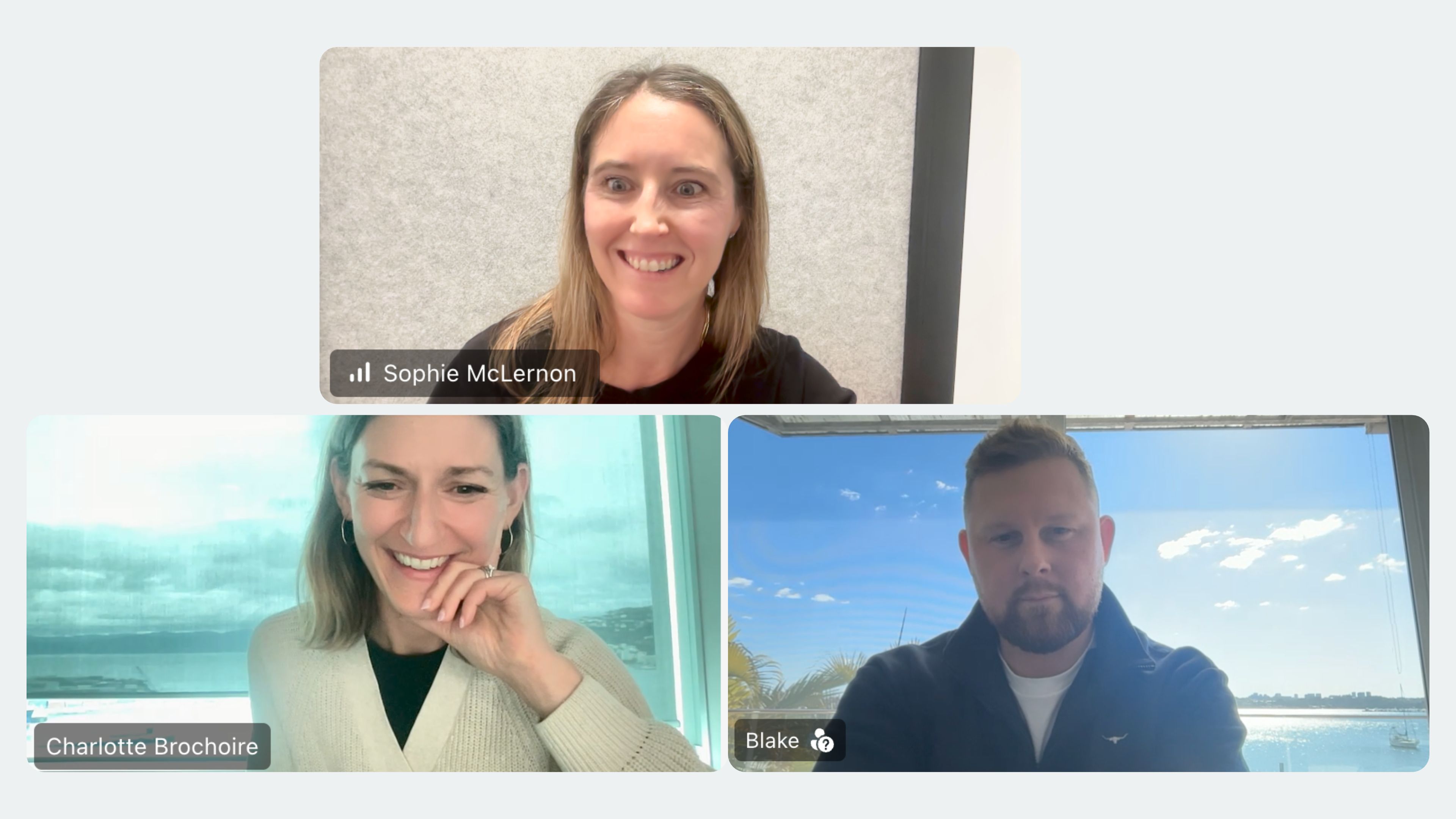
To explore that decision, we sat down with Charlotte Brochoire, Associate Director at Humankind and fractional Head of HR at Projectworks and Blake Trott, Sales Manager at Rippling. Between them, they’ve seen international expansion from both sides. Blake has spent the past year building Rippling’s presence across APAC, while Charlotte has worked across global markets during her career at Danone and now supports NZ businesses growing internationally.
For New Zealand businesses, going offshore is often a natural part of growth. At some point, that means moving from selling into a market from your current base to building a team there.
Sometimes the signals are clear: customers in-market are confirming product/market fit, the NZ-based team is travelling more often to see and support them, and eventually someone says, “we probably need someone there”.
Other times, the move comes earlier. You might not be completely sure you’ve got the right product/market fit, but desktop research and long-distance calls are no longer enough to understand the opportunity.
This is where the people and commercial decisions start to converge and where getting one decision wrong can make the others much harder.
Get clear on the job the market needs done
A first hire into a new country can be doing very different jobs depending on how far the business has already got.
You may still be testing whether the product and message work locally. You may have customers coming through and need someone closer to them. Or you might be entering through partnerships, where company knowledge can be particularly valuable alongside someone who already knows the market.
Blake has approached this deliberately at Rippling. The team spent close to a year travelling regularly from Australia to Singapore, working with customers and refining the product before starting to build a local presence in Southeast Asia.
That time on the ground gave the team a clearer view of where they could win and what they actually needed from the people they would eventually recruit there.
“Spending time on the ground gave us the chance to learn from customers, test our assumptions and get much clearer on the opportunity. By the time we started building the team, we weren’t asking that first hire to figure everything out from scratch,” says Blake.
There’s an important distinction here. A first offshore hire can help you learn more about a market. Asking one person to go and prove whether the market exists at all is a very different brief.
The clearer you are on what’s already been proven and what you still need to learn, the easier it is to work out who you actually need on the ground.
The right first person is rarely obvious
Where there is still a lot to work out, both Charlotte and Blake tend to lean towards experience, although Charlotte describes a particular type of senior person. They need enough experience to make good calls and shape the direction, while still being comfortable rolling up their sleeves and doing the work themselves. There may be no local team around them, little infrastructure and plenty that still needs solving as they go.
The experience comes at a higher price, which is one of the quirks of entering a new market: the places where you know the least can be the ones where you most need someone who has done it before.
Blake agrees this is an option to start with but warns about the risks of asking one person to carry an entire country for too long. An enormous brief without the support around it becomes unsustainable quickly, however capable the person is.
Once the model is more established, you have more options. If demand is already there and the business knows how it wants to serve the market, someone earlier in their career may be able to step into a much clearer brief.
The decision between hiring locally and moving someone from New Zealand is just as important. Charlotte is a big believer in international mobility and has experienced it herself, though she has also seen strong internal people struggle when they arrive with deep company knowledge and almost no local network or context.
There are ways to get the best of both. Charlotte points to the successful pairing of an internal person who knows the product and takes that knowledge with them, complemented by a local partner or first hire who knows the market. Another upside of such a pairing is that you can count on your existing talent to take the company’s DNA and culture with them, and help embed it into your new market as you grow the team. They can also help you quickly assess whether your first local hire truly fits.
The organisation must move with the hire
Putting someone offshore also forces decisions and changes back at home.
A business can hire an experienced market lead and still keep most of the budget and authority in New Zealand. Blake has seen how quickly it slows things down when the person closest to the customer has to wait for another country to approve local decisions.
Charlotte links this directly to the calibre of person you hire. If you want someone to make decisions locally and at pace, you need someone you trust to make those calls, and they need clarity about where their authority sits.
Organisation design shows up here in a practical form: reporting lines, budget, which decisions stay with the local lead and where the home leadership team remains involved.
It also asks more of the leadership team than may be obvious at the start. A new market needs access to people at home, particularly while the team is starting out and still small. Blake has seen that support begin strongly and then taper off too soon, while new in-market teams still need significant support.
Charlotte sees the same need from the people side, where connection and leadership attention have to become more deliberate once people are spread across countries.
Your employment setup can grow with you
Then there is the practical question of how to employ people.
A contractor can suit an earlier piece of market work where the relationship is properly set up that way. An Employer of Record (EOR) allows you to employ someone locally without immediately establishing your own entity. Your own entity may make more sense as the local team and your commitment grow.
Blake does not see this as a prescribed journey from one structure to another. The setup should suit where the business is at and change when the business changes.
It’s part of why Rippling is built to support contractors, EOR and owned-entity employment on one platform, so a business can move between them as it grows without switching systems or re-entering the same employee records each time.
Charlotte sees another benefit of working through an EOR that is easy to miss. Access to local employment experts through the EOR helps the business build its own knowledge of the new jurisdiction as it goes, so when it is ready to take more responsibility in-house, it starts from a much stronger place.
She takes a similar approach to policies and benefits, using the term “glocal” for keeping clear company-wide principles while adapting the detail to each country. In practice, it can mean deciding what you want to stand for as an employer first, then working out how that translates across different legal requirements, local expectations and working cultures.
Those early decisions matter because the first few people in a market often set expectations for everyone who comes after them.
Be serious about what comes next
The first salary is only part of what a new market will ask of the business. There can be travel, local activity and additional people earlier than expected, along with leadership time and decisions that need to happen faster than they did when everything sat in New Zealand.
Charlotte summed up the conversation well when she said to “be serious about the investment.”
For a CEO considering the move, that’s a useful way to think about it. The decision is bigger than whether you can afford one offshore hire. It is whether you have enough confidence in the opportunity, a clear enough idea of what you need that person to do, and the appetite to build the organisation and support around them to truly set them up for success.
Planning your next international hire? Learn more about how Rippling can support your team as you expand.
Need strategic HR advice as you scale your organisation without adding permanent headcount? Discover Humankind’s Performance Partnership model for flexible HR support in NZ and beyond.