AI is changing how we work. Are our organisations keeping up?
Rokt is well ahead of the curve when it comes to AI transformation.
The global technology company set out to move five times faster, with AI as the enabler. And they've gone well beyond introducing new tools, rethinking how their organisation is structured, how people work together and what it takes to perform at their best.
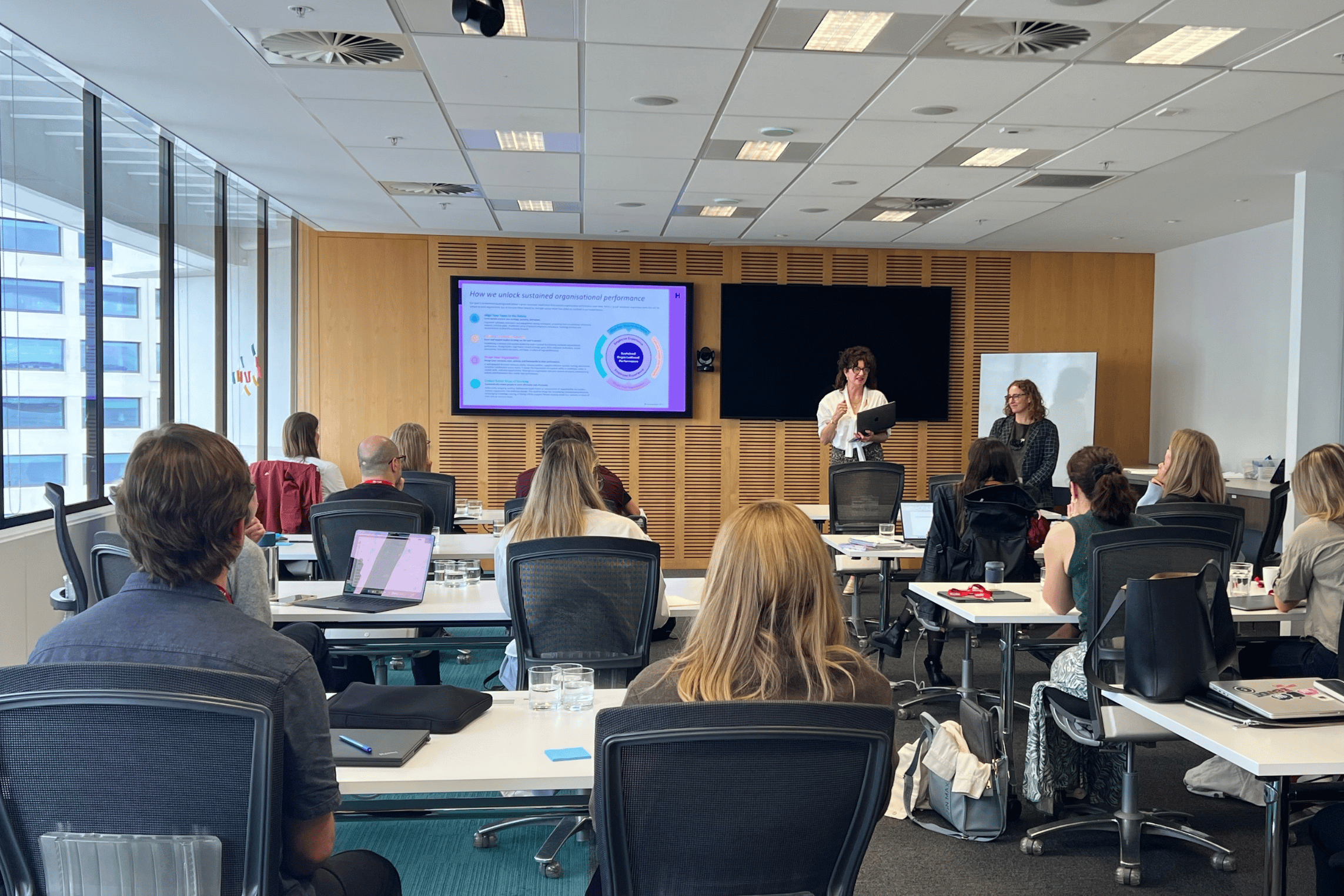
We recently had the opportunity to hear about Rokt's journey in our Superhumans session with Simon Curran, Chief Development and Culture Officer at Rokt, hosted by Humankind Founder Samantha Gadd.
Simon has spent much of his career studying high-performing teams, including co-founding the All Blacks Performance Labs. He shared some fascinating insights into the changes Rokt has made, what they've learned along the way and how they're continuing to challenge traditional thinking about leadership and performance.
For us, the conversation raised an important question: if AI is changing what people can achieve, how should we rethink the way our organisations operate?
Transformation starts with leadership
One of Rokt's earliest decisions was to approach AI transformation as a movement rather than a mandate.
They started by challenging a team to completely rethink recruitment and halve the time it took to hire. The results demonstrated what was possible and helped build momentum across the business.
Leaders were also expected to experiment themselves, share what they were learning and encourage others to challenge existing ways of working.
It's something we see often at Humankind, successful change relies on leaders creating commitment, demonstrating the behaviours they're asking of others and giving people the confidence to try something different.
Rethinking how organisations are designed
As AI changes what people can achieve, Rokt has been challenging traditional assumptions about roles, management layers and how teams operate.
They've reduced management layers, broken down functional boundaries and given people greater ownership of outcomes. Experienced people are also taking on player-coach roles, developing capability through everyday work.
For growing businesses, it's worth asking whether our organisations are designed around the outcomes we want to achieve, or simply the way we've always worked.
At Humankind, we believe organisational design should enable performance. As AI changes how work gets done, leaders have an opportunity to rethink how teams are structured, where decisions are made and how to get the best out of their people.
The attributes that will matter most
One of the most interesting insights was Simon's reflection on why some people thrive through transformation while others struggle, regardless of their experience or technical expertise.
Working with former Navy SEAL commander Rich Diviney (The Attributes), Rokt has found three attributes matter disproportionately in its engineering teams: open-mindedness, curiosity and cunning.
Open-mindedness is the willingness to consider different possibilities. Curiosity drives people to explore them. Cunning is the ability to challenge assumptions and find creative ways to solve problems.
Simon described how cunning involves questioning whether the rules and constraints we're working within are real or imagined, and what might happen if we challenged them.
As roles and expectations change, the ability to learn, adapt and solve unfamiliar problems becomes increasingly valuable.
It's worth considering how much emphasis we place on these attributes when hiring and developing people, particularly as the skills our organisations need continue to change.
High performance still starts with people
Despite the focus on technology, some of Simon's most interesting insights came from his experience with high-performing sporting teams.
He shared three foundations of high performance: connection, clarity and courage, in that order.
Leaders often move straight to setting direction and expectations, but connection is what creates commitment.
His definition of belonging particularly resonated with us: "Accepted for who you are, and expected to bring your best."
It's something we believe strongly at Humankind. Creating an environment where people feel valued and supported goes hand in hand with setting clear expectations and helping them perform at their best.
Rokt has also challenged traditional approaches to performance development, introducing more frequent feedback, shorter performance cycles and learning through apprenticeship.
Simon asked why an athlete receives feedback every few seconds, while an executive might wait six months.
As work evolves, the way we develop people and support performance needs to keep pace. There's an opportunity to make feedback and development a more consistent part of everyday work.
Leading through uncertainty
One of Simon's reflections was particularly relevant for leaders navigating change.
Early in Rokt's transformation, leaders tried to reassure employees about what the future would look like. But as things evolved, those predictions often proved wrong.
They learned to be more transparent about what they knew, what remained uncertain and what would happen next.
It's a useful reminder that building trust through change requires clear direction, open communication and a willingness to have difficult conversations along the way.
As AI continues to change roles and expectations, leaders will need to balance supporting their people with making the decisions required for their organisations to perform.
What comes next?
When Sam asked Simon what he would do differently if he were starting Rokt's transformation again, his answer was that he would move faster.
It's a thought-provoking reflection when many organisations are still working out what AI could mean for them.
For us, one of the biggest takeaways is the opportunity AI presents to rethink organisational performance more broadly. Beyond individual productivity, it's about how work is organised, how leaders lead and how we develop people for what's next.
Every organisation will need to find an approach that works for its people, ambitions and stage of growth.
As AI changes what's possible, it's worth looking at whether the way we're structured, how we lead and how we develop our people are helping us get the best out of them.
This article draws on our Superhumans conversation, Global Leadership in AI Transformation: From Experimentation to Organisation-Wide Change, with Simon Curran, Chief Development and Culture Officer at Rokt, hosted by Samantha Gadd, Founder of Humankind.